
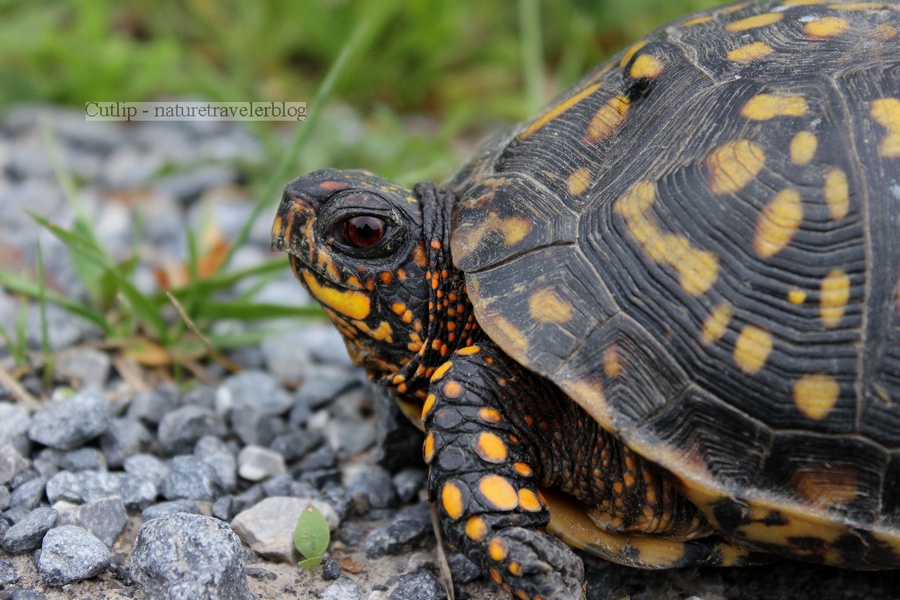
Box turtle at the Sarver trailhead
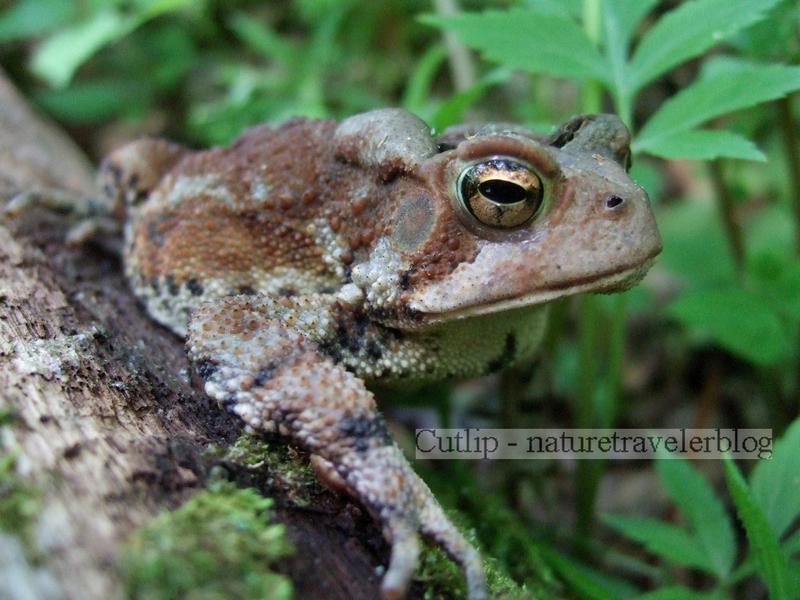
High up on the ridge of Peter’s Mountain, I was painting trail blazes along a remote section of the Appalachian Trail. The weather that day was perfect for trail work; a refreshing, cool breeze blew lightly from the west side of the ridge, and beams of golden sunlight penetrated the layers of the thick, dark-green foliage, the greenery that is prevalent during the hot days of August. At one point during the hike, a sprightly frog jumped out in front of my feet. I put down my tools and grabbed my camera. On my hands and knees, I followed the frog down the trail. This frog did not cooperate with my request for a pose as it continued hopping and keeping a safe distance. After many feeble attempts to get close, I decided to give up and move on with my hike. When I stood up on my feet, the frog hopped away a few more times, landing on a log and sitting still for a few moments. I thought to myself, one more try. I got down again and slowly crawled towards the log. The frog did not flinch, allowing me to get about two inches away for some great macro shots. After taking a few pictures, I slowly backed away and returned to my tools. When I walked by the log several minutes later, the frog was still sitting in the same position.
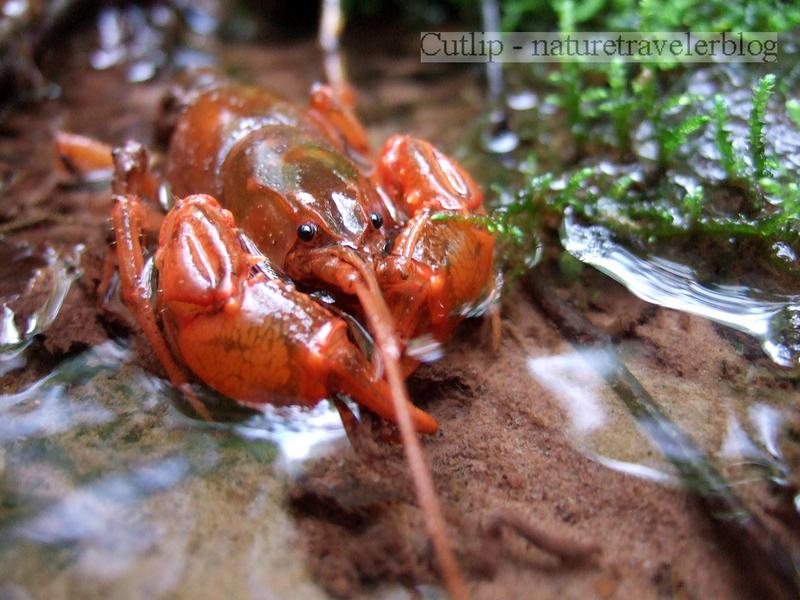
Crawfish at the Rice Fields on the ridge of Peter’s Mountain
The spring air was chilly, with temps in the mid-forties, as a strong breeze blew a cold mist on the work crew. There were four of us maintaining the Star Haven Shelter at the Rice Fields on Peter’s Mountain, preparing it for the influx of north-bound thru hikers. We replaced the nearly-filled logbook, stirred the moldering privy, and picked up trash and downed limbs. For our last job, we hiked down a steep side trail to the shelter’s water source, which is a small spring that meanders along the side of the mountain. During dry conditions, the spring becomes shallow, sometimes drying up completely. Our job was to make a dam out of rocks to create a pool so hikers can more easily filter the water. As we walked along the small stream to determine the best place to pool, I saw a crawfish that had recently molted. Its orange color stood out in the bright green moss. I had never seen a molted crawfish, and I certainly did not expect to find one high up on a ridge, far from significant water sources. With the cold air and water temperatures, the crawfish barely moved, thus providing easy photo opportunities.
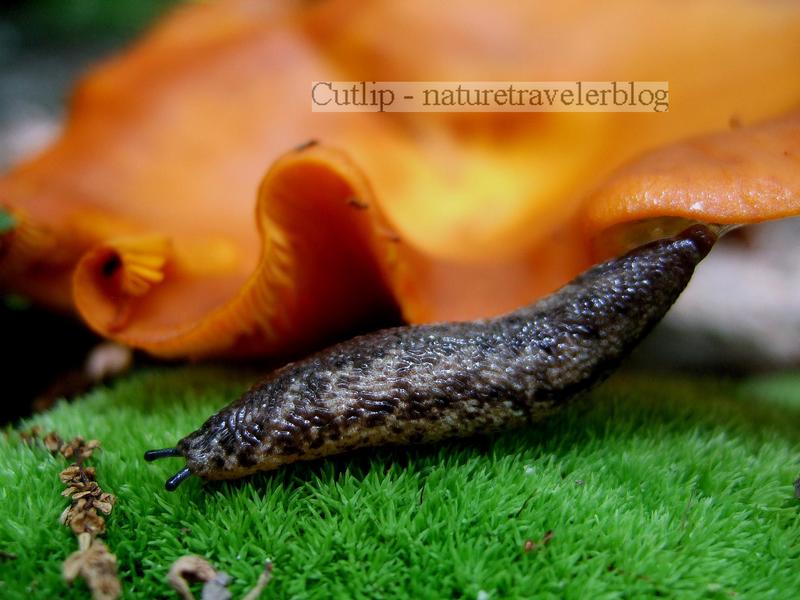
The summer rains enabled a wide variety of mushrooms and moss to flourish on the trail.
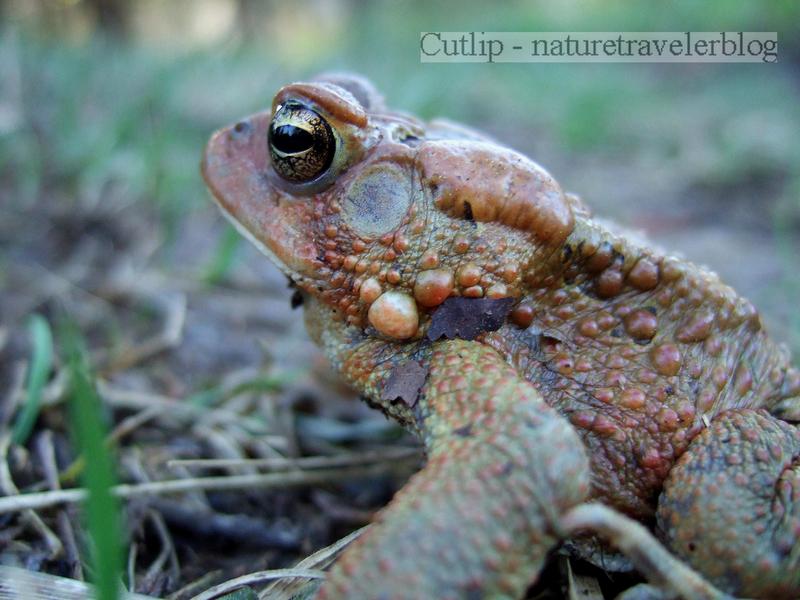
Early spring. Cool, misty morning. Tinkers Cliff hike via the Andy Lane Trail. My surroundings had a winter feel; dormant trees, dried deadheads and decaying stalks, and moist, spongy soil, covered with desiccated leaves and limbs. Some grasses and woodland growth had pushed their way through the layer of faded leaves, giving the wintered ground some color. I didn’t expect to find any critters on this early-morning hike. As I approached Tinkers Creek, a frog jumped out from the side of the trail from where it had burrowed itself in the leaves. The frog’s energy was low due to the cool temperatures, allowing me to get close for some great shots.
 naturetravelerblog